Quotesheet: Carbon Markets are carbon colonialism and the Carbon Market Alliance is a league of colonizers.
Summary
The Global Campaign to Demand Climate Justice (DCJ) and its members and allies from Brazil and across the world reject initiatives like the Carbon Market Alliance introduced by the Brazilian presidency and endorsed by the EU, UK, and others.
Reactions from members and allies of Global Campaign to Demand Climate Justice
10th November 2025
Belem, Brazil
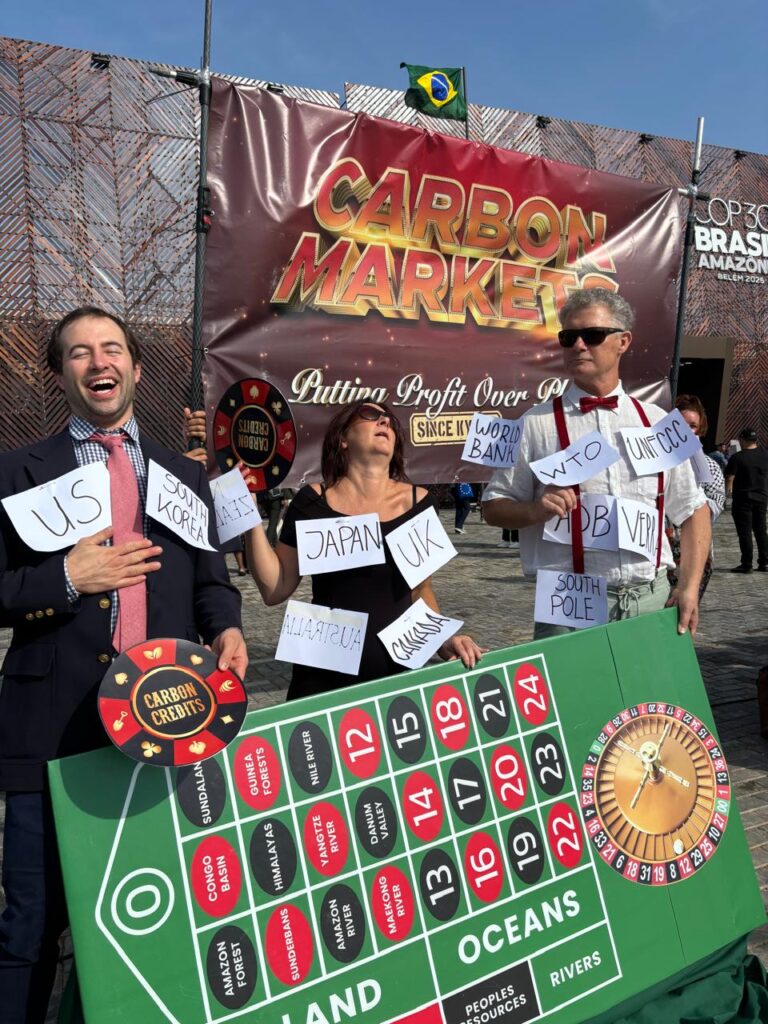
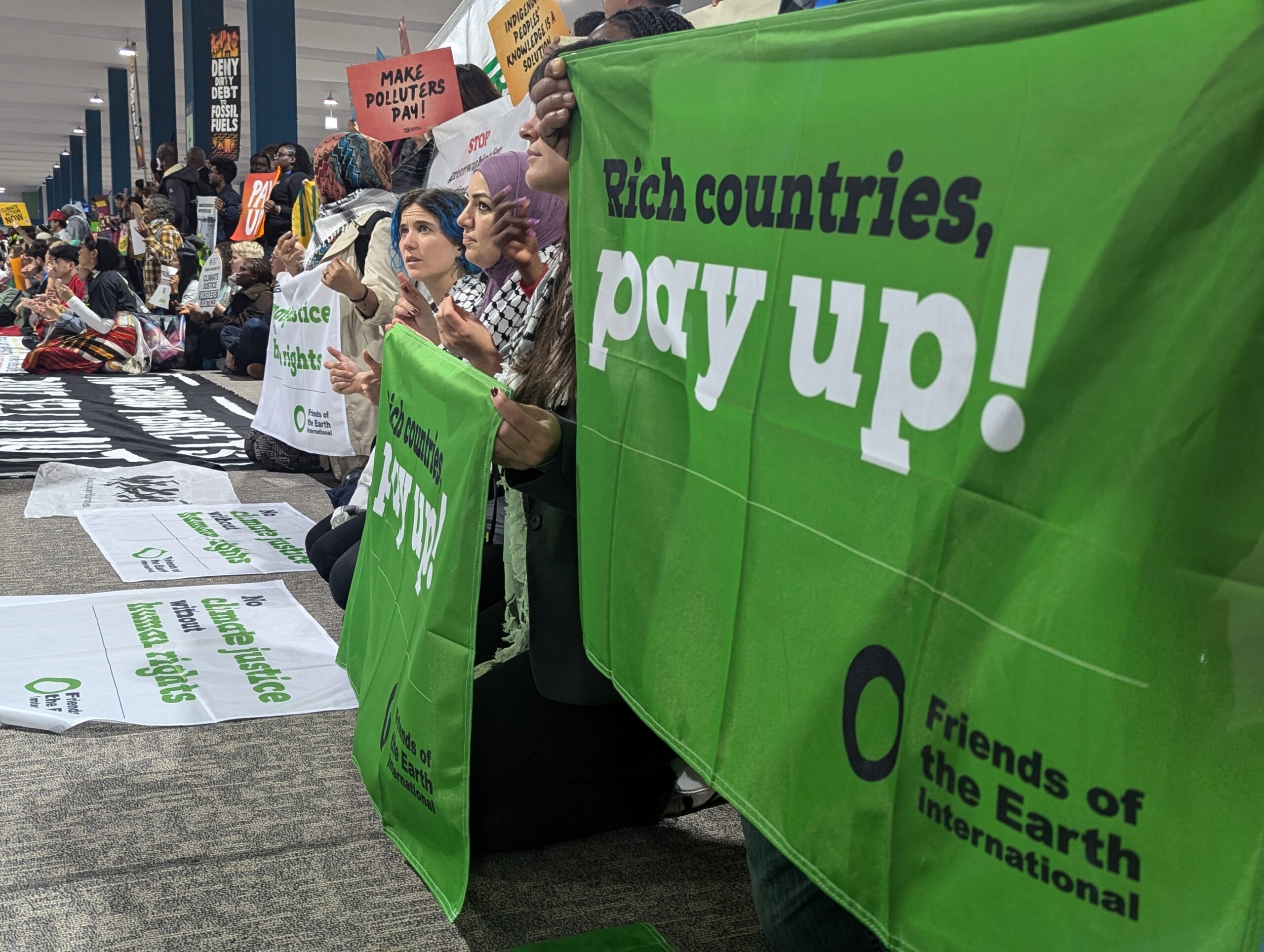
(Image from the action against Carbon Markets demonstrating the Carbon Casino taking place at COP 30)
The Global Campaign to Demand Climate Justice (DCJ) and its members and allies from Brazil and across the world reject initiatives like the Carbon Market Alliance introduced by the Brazilian presidency and endorsed by the EU, UK, and others. The global scaling up of carbon markets–whether through this coalition or through the implementation of Article 6– continues to advance these risky and unproven schemes and technologies despite years of research evidencing their failure to lead to emissions reductions. Recent research released ahead of COP30 includes a study spanning 25 years, demonstrating the failure of such schemes in reducing emissions and evidence for harm caused to frontline communities and ecosystems. The Brazilian presidency, rather than remedying the disastrous impacts of carbon markets, is building new institutions that further embed these false solutions into the climate regime. This is a dangerous distraction from the real, people-centered solutions we urgently need, and a get-out-of-jail free card for the world’s biggest polluters.
Quotes
Lidy Nacpil, Coordinator, Asian Peoples’ Movement on Debt and Development
Carbon markets and offsets have repeatedly failed to curb temperature rise, yet rich polluters insist that these schemes will solve the climate crisis. Carbon markets are merely a license for rich polluters to continue polluting, while denying public, grants-based climate finance to the Global South. New schemes, such as the Global Carbon Markets Alliance, only exist to delay the phaseout of fossil fuels and distract us from the Global North’s legal obligation to provide climate finance. As the world comes dangerously close to overshooting the 1.5 C goal in the next few years, it is imperative for governments to reject such false solutions and commit to real climate action.
Caroline Muturi, Coordinator, IBON Africa
Across Africa, we are increasingly seeing carbon market projects being rolled out, locking our communities into unfair deals that reinforce corporate capture over our lands and resources. These schemes repeat the same extractive logic that has defined Africa’s place in the world for centuries: taking from us to allow those in the global North to delay real action. Our continent is not a carbon sink for the world. We denounce the launch of this carbon market alliance. It is a dangerous distraction that hands power to the very actors driving the crisis. We do not need yet another form of greenwashed plunder. What we need is the space to lead and to define our own future on our own terms.
Jok Jau Evong, Sarawak coordinator, Sahabat Alam Malaysia (FoE Malaysia)
Short quote: The petition by Sahabat Alam Malaysia / Friends of the Earth Malaysia and partners, in solidarity with the Marudi Indigenous communities in Sarawak, sends a clear warning to COP30: global carbon markets risk fueling land grabs and exploitation. The Marudi people’s struggle reveals how forest carbon offset projects done in the name of climate action violate Indigenous land rights. Climate justice is impossible without respecting these rights. Say no to false solutions and carbon colonialism.
Long quote: The ongoing petition —jointly initiated by Sahabat Alam Malaysia / Friends of the Earth Malaysia and partners that stand in solidarity with the Marudi indigenous communities affected by the forest carbon project in Sarawak, Malaysia serves as a powerful warning to the COP30 in Brazil: any attempt to establish a global coalition of carbon markets risks facilitating further land grabbing and exploitation. The communities have raised grave concerns that the project, carried out in the name of climate action, is instead undermining their land rights. Their struggle exposes the deep injustices that can arise from carbon market initiatives. We must stand with the community and demand that their customary rights are recognised and respected. Climate justice cannot exist without respecting the rights of indigenous peoples. NO to false solutions and carbon colonialism.
Jax Bongon, Policy Officer, IBON International, Phillipines
After almost thirty COPs, we are outraged to see world leaders recycle the same failed, false ‘solutions.’ The plan to launch this carbon market alliance sends a dangerous signal about where COP30 is headed. These market schemes only buy more time for polluters and distract from the urgent action that justice demands. Our communities are already paying the price for this denial. We refuse to accept another round of empty promises. Real solutions already exist. Communities across the Global South have long demonstrated what effective, just climate action looks like. It is time for those in power to stop imposing these false ‘solutions’ and start following the leadership of the peoples who are keeping the planet alive.
Rachel Rose Jackson, Director of Climate Research and Policy, Corporate Accountability
The world heads to Belém as a deadly typhoon hits the Philippines, and as the climate emergency is wreaking death and destruction on the doorstep of millions around the world. COP30 cannot exist in an ulterior reality–far too much is at stake. Carbon markets and commodifying nature for profit at the expense of people and the planet is what has gotten us here. For decades, carbon markets have failed time and again, and spurred significant harm. What’s the proof of this? Record high emissions and temperatures, the crossing of environmental tipping points at rapid pace, and rampant fossil fuel use. Any proposed solution that continues to effectively put the planet up for sale and allow polluters to get-out-of-jail-free is a dangerous distraction. The only way forward is real, proven, community-centered solutions. And the time to enact these must be now.
Lise Masson, International Programme Coordinator, Friends of the Earth International
Net zero, carbon markets, offsets, geoengineering – these are not climate solutions, they are escape routes for the very corporations burning the planet. These schemes are rooted in carbon colonialism – they steal land, silence Indigenous Peoples, and keep the fossil fuel era alive under a new green mask. Real solutions already exist in our communities: defending land, protecting forests, building agroecology, and powering our lives without exploitation. The future will not be sold on a carbon market.
Myriam Douo, Campaigner, Oil Change International
Carbon markets are a dangerous distraction that allow fossil fuel companies to keep polluting under the illusion of climate action. These schemes do nothing to reduce emissions at the source and instead enable continued environmental destruction and climate injustice. We need real solutions that end fossil fuel use, not financial tricks that delay the transition. As the host of COP30, Brazil must stand with the people demanding a fast, fair, and funded fossil fuel phaseout, and not side with fossil fuel profiteers pushing failed market schemes that delay real action.
Sebastian Ordoñez Muñoz, Senior international programmes officer – Latin America / Climate Justice, War on Want, Latin America / UK / International
(ENGLISH) ‘Carbon markets and offsets are carbon colonialism — a licence for rich countries, including the UK, to dodge their fair share of reducing/cutting global emissions — while making frontline communities pay. Carbon offsets don’t cut emissions; they are based on false promises and stolen land. We are demanding an end to carbon markets and a real just transition to fairer societies and economies — led by people, not polluters — through a Global Green New Deal.’
(SPANISH) ‘Los mercados y las compensaciones de carbono son colonialismo del carbono: una licencia para que los países ricos, incluido el Reino Unido, eludan su responsabilidad histórica de reducir las emisiones globales, mientras las comunidades en primera línea pagan el precio. Las compensaciones de carbono no reducen emisiones; se basan en falsas promesas y tierras robadas. Exigimos el fin de los mercados de carbono y una transición justa real hacia sociedades y economías más justas, liderada por los pueblos, no por los contaminadores — a través de un Nuevo Acuerdo Verde Global.’
POR ‘Os mercados e as compensações de carbono são colonialismo do carbono — uma licença para que os países ricos, incluindo o Reino Unido, evitem a sua responsabilidade histórica de reduzir as emissões globais, enquanto as comunidades na linha de frente pagam o preço. As compensações de carbono não reduzem emissões; baseiam-se em promessas falsas e terras roubadas. Exigimos o fim dos mercados de carbono e uma transição justa real para sociedades e economias mais justas — liderada pelos povos, não pelos poluidores — através de um Novo Acordo Verde Global.’
Long quote:
ENGLISH ‘For decades, carbon trading has failed to cut emissions while inflicting deep harm on Indigenous peoples and frontline communities in the Global South. Now, with the UK and other industrialised nations refusing to pay their climate debts or do their fair share towards cutting emissions, carbon trading is being scaled up globally. This is carbon colonialism: shifting responsibility from those most responsible to those already most affected. We are pushing for a Global Green New Deal to reject this system of exploitation and transition to fairer societies and economies. Real climate solutions lie in community-led transitions — in public ownership, food sovereignty, and energy democracy — not in selling the planet to the highest bidder.’
SPANISH ‘Durante décadas, el comercio de carbono no ha logrado reducir las emisiones y ha infligido un profundo daño a los Pueblos Indígenas y a las comunidades en primera línea del Sur Global. Ahora, con el Reino Unido y otras naciones industrializadas negándose a pagar sus deudas climáticas o a asumir su responsabilidad histórica en la reducción de emisiones, el comercio de carbono se está ampliando a escala mundial. Esto es colonialismo del carbono: trasladar la responsabilidad de quienes más contaminan a quienes más sufren.
Estamos impulsando un Nuevo Acuerdo Verde Global para rechazar este sistema de explotación y avanzar hacia sociedades y economías más justas. Las verdaderas soluciones climáticas están en las transiciones lideradas por las comunidades —en la propiedad pública, la soberanía alimentaria y la democracia energética—, no en vender el planeta al mejor postor.’
POR ‘Durante décadas, o comércio de carbono falhou em reduzir as emissões e causou danos profundos aos Povos Indígenas e às comunidades na linha de frente do Sul Global. Agora, com o Reino Unido e outras nações industrializadas a recusarem-se a pagar as suas dívidas climáticas ou a assumir a sua responsabilidade histórica na redução das emissões, o comércio de carbono está a ser ampliado globalmente. Isto é colonialismo do carbono: transferir a responsabilidade dos que mais poluem para os que mais sofrem.
Estamos a lutar por um Novo Acordo Verde Global que rejeite este sistema de exploração e conduza a sociedades e economias mais justas. As verdadeiras soluções climáticas estão nas transições conduzidas pelas comunidades — na propriedade pública, na soberania alimentar e na democracia energética —, não na venda do planeta ao melhor licitante.’
David Williams, Rosa Luxemburg Stiftung
Carbon markets perpetuate and enforce neocolonial power structures by placing control of Global South ecosystems in the hands of Global North investors and institutions. These models deepen economic dependency, prioritizing profit and market logic over justice, sovereignty, and fair shares allocation.
Erika Lennon, Center for International Environmental Law (CIEL)
At a time when the focus must be on phasing out fossil fuels full stop, ramping up reliance on carbon markets is the wrong path. Report after report has shown that instead of driving real ambition, carbon offsets mainly serve to prolong the polluting industries behind the climate crisis and paper over their ongoing impacts. The world doesn’t need more escape hatches that only delay action to halt planet-warming pollution at its source and deepen climate chaos. The Brazilian Presidency should focus on real solutions to the climate crisis, not on this dangerous distraction.