DCJ intervention at COP30: Article 6.4 negotiations
Summary
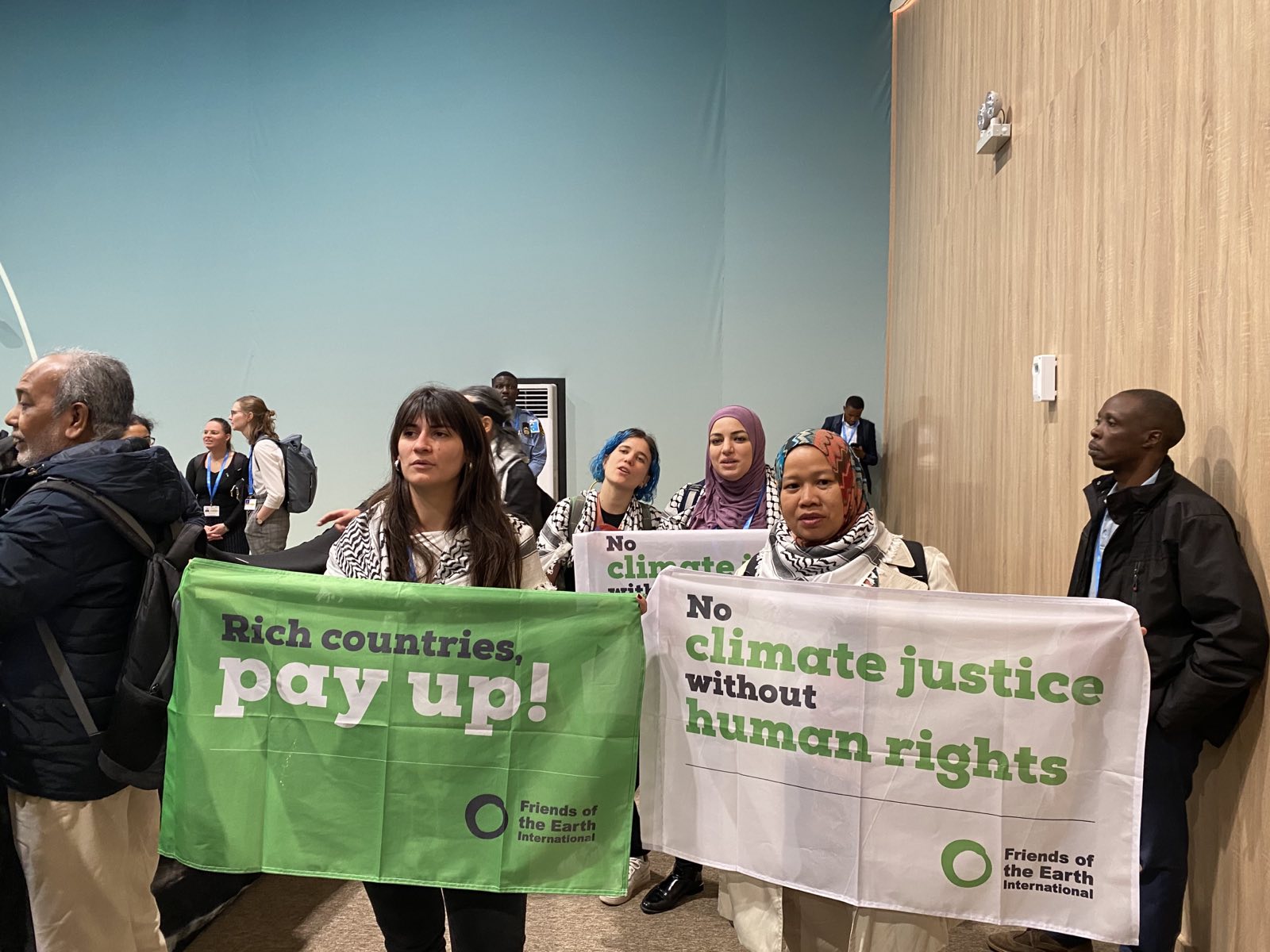
As one half of the Environmental Non-Governmental Organisations (ENGO) Constituency at the UNFCCC, DCJ intervenes at plenaries and dialogues during the climate talks to hold governments accountable and ensure that parties get to hear peoples' demands and critiques. The UNFCCC mandates formal representation of civil society and speakers representing DCJ are given 30 second to 1 minute slots to intervene on critical issues.
Nov 14th: I am Biya Gondal from [Earth], a member of the global campaign to Demand Climate Justice, part of ENGO.
The Article 6.4 text proposed today is a dangerous and damaging attempt to undermine real climate action. Parties have agreed that action under the Paris Agreement must be based on the best available science. The science is crystal clear that global warming is caused by permanent emissions of CO2 to the atmosphere, and removals into forests and lands is not permanent, and does not compensate for fossil fuel emissions.
Let’s be clear – the Paris Agreement Crediting Mechanism already falls far short of the science – offsetting permanent fossil fuel emissions with temporary removals will lead to increased warming. Offsets have been widely shown to fail to represent real emissions reductions, with systemic over-crediting, while leading to human rights abuses in some cases.
There is no agenda item at this COP to renegotiate the work of the Supervisory Body. The Standard on Non-permanence and Reversals, if anything, should be made more stringent, instead of less. Rather than seek to undermine this work, we call on Parties to delete paragraphs 19 to 30, delete paragraph 35, and to request the Supervisory Body to continue their work, on the basis of best available science, to ensure the monitoring extends beyond crediting periods to match the duration of atmospheric emissions.
We thank you for taking this into consideration.