No False Solutions in the Transition Away from Fossil Fuels: A Climate Justice Position from the Global Campaign to Demand Climate Justice
Introduction
Last year at COP30 in Belem, Brazil, 80 countries around the world reiterated their commitment to transition away from fossil fuels. The First Conference on Transition away from Fossil Fuels being held in Santa Marta, Colombia from 24-29 April is an important and urgent first step in making that commitment from last year a reality. The call to transition away from fossil fuels has become unavoidable. For peoples and communities across the Global South, this is not just a future policy choice but a very urgent question of survival in the present. The Indigenous Peoples, afro-descendants, farmers, peasants, fisherfolk, workers, youth, women, gender diverse, and frontline communities are already living through the impacts of the climate crisis with worsening floods, droughts, hunger, displacement, debt, militarisation, and the destruction of lands, livelihoods, and ecosystems. These communities, who are least responsible for this crisis, have long insisted that there can be no climate justice without ending large scale fossil fuel extraction, production, and consumption.
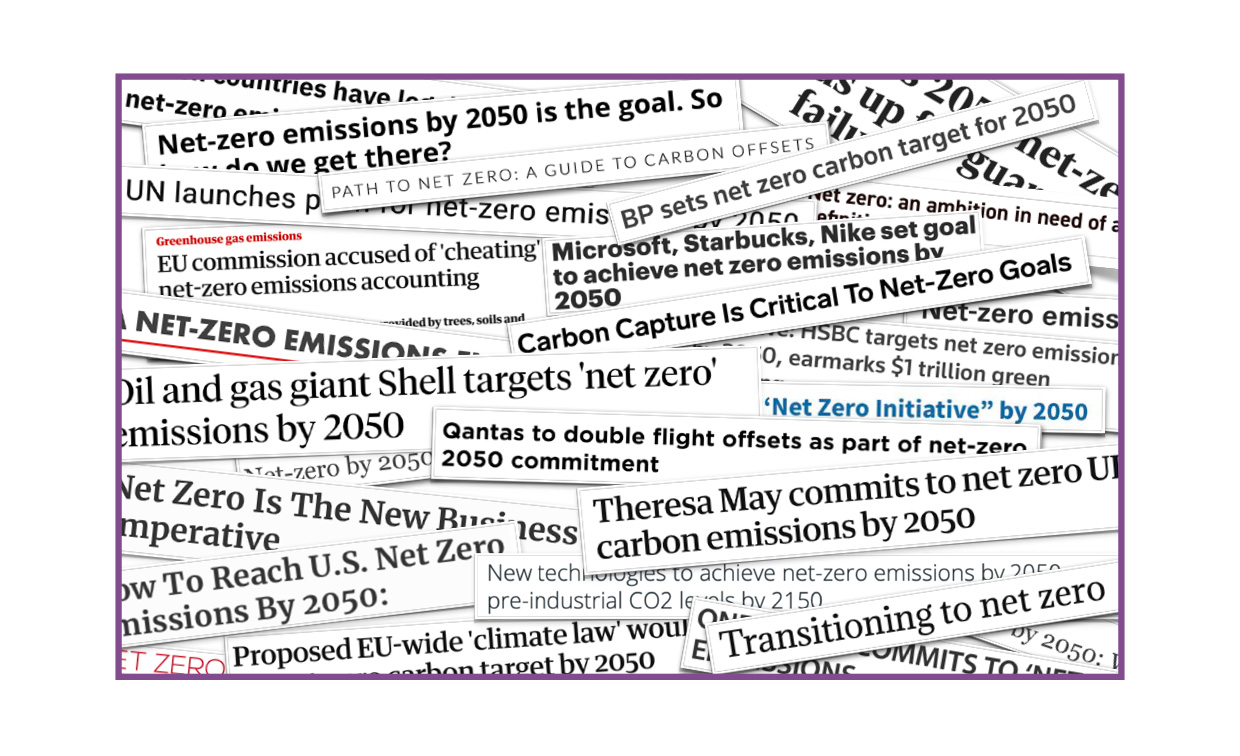
While the demand to move away from fossil fuels has gained political ground, there has been a consistent and coordinated effort to redefine what that transition entails and looks like. At the very moment when governments should be agreeing to phase out fossil fuels rapidly, equitably, and with public finance and reparations, corporations and many states are pushing a different agenda. Fossil fuels are not truly being phased out, but extended through offsets, carbon capture, false finance, and large-scale “green” projects that continue to reproduce extraction and dispossession.
It is important that the first global conference on transitioning away from fossil fuels does not become another forum where governments and corporations adopt the language of transition while protecting the systems that created the crisis. It must instead draw a firm political line that there can be no real transition away from fossil fuels if false solutions continue to dominate the agenda.
What do we mean by False Solutions?
False solutions are policies, technologies, market instruments, and investment models that claim to address the climate crisis while allowing fossil fuel extraction, corporate power, and existing extractive and economic models to continue unfettered. Instead of confronting the root causes of the crisis like reducing emissions at source at the speed and scale required and redistribution of wealth, power, or responsibility, false solutions create new opportunities for profit and extraction and control over land, labour, and nature to continue.
These false solutions include carbon markets and offsets, carbon capture and storage, so-called “abated” fossil fuels, geoengineering, net-zero accounting tricks, the commodification of forests and ecosystems through market-based “nature” schemes, and fossil gas being reframed as a transition fuel. They also include large-scale, corporate-controlled renewable energy projects when these are imposed through land grabbing, enclosure, debt dependence, ecological destruction, and centralised corporate control rather than democratic public planning and community self-determination. When “green” energy expansion reproduces extractivism, land grab and displacement and reinforcement of inequality, it becomes another false solution rather than a pathway to justice.
Why False Solutions Are a Real Barrier to Transitioning Away from Fossil Fuels
False solutions do not exist in fringes but are central to any discussion that is looking to define just transition away from fossil fuels. They are an active barrier to transitioning away from fossil fuels because they delay phase-out, redirect finance, deepen structural inequality, and reinforce the extractive economic models most responsible for the current crisis.
Carbon capture, offsets, and “abated fossil fuels” are increasingly used to justify new oil and gas projects, new infrastructure, and continued investment in fossil energy. They are often used as loopholes by governments and companies to avoid real emissions cuts. They provide cover for big polluters to continue polluting, and come with devastating impacts on communities and ecosystems. In past decades, climate policy discussions have actively led to legitimising carbon based approaches as a mode to reduce emissions, especially Article 6 of the Paris Agreement which has opened the door for countries to participate in various forms of carbon markets.
False solutions allow the Global North to continue consumption of fossil fuels and to continue emitting, while outsourcing the social, ecological, and territorial costs of “transition” to the Global South. Forest and land-based offsets, or nature-based solutions (NBS) rely on the idea that the continued pollution of wealthy countries and corporations can be mitigated by controlling forests, farms, coastlines, and territories elsewhere, especially in the Global South.
However, considerable research in the past few years has consistently shown the failure of markets based approaches in actual emission reduction. Corporate Accountability’s 2025 report, Built to Fail, found that in 2024 roughly 207.8 million offset credits were retired through the voluntary carbon market and that the largest 100 projects accounted for about half of that volume. Its review of major projects with publicly available ratings found that many high-volume projects had only low, moderately low, or very low likelihood of delivering the claimed climate benefit, including renewable energy, hydropower, wind, solar, cookstove, and forest carbon projects. It shows how the voluntary carbon market is saturated with projects whose emissions claims are not only weak but deeply questionable.
NBS are another group of false solutions that enable rich countries to keep on profiting at the expense of people and the planet. It provides cover for Big Polluters to continue emitting whilst appropriating vast amounts of land, often disregarding Indigenous and Human rights. NBS poses a significant threat to our climate as well as food sovereignty, agroecology, and land rights across the world. Similarly, REDD+ and related schemes commodify land, forests and our commons, while giving the developed countries a way out of their obligations. REDD+ was pushed by the Global North rather than originating from Indigenous Peoples, custodians and protectors of forests, or Global South countries.
This is precisely why market based approaches, policies that commodify our lands, forests, oceans, and our commons are not the legitimate solutions to transitioning away from fossil fuels as positioned by the big polluters, but in fact are a structural barrier. They play a destructive role by transforming the urgent political task of keeping fossil fuels in the ground into an accounting exercise through which polluters can continue polluting as long as their burden can be shifted elsewhere.
Role of False Solutions in Deepening Debt Crisis and Injustices in the Global South
False solutions are barriers because they displace the wider transformation that is actually needed, especially because they tend to centre private finance, blended finance, carbon revenues, and speculative markets.
In recent years, Multilateral Development Banks (MDBs) have also played a significant role in financing false solutions. MDBs claim alignment with the Paris Agreement and the Sustainable Development Goals but their recent energy investments show a troubling pattern: Public finance continues to flow to large-scale, centralised, high-risk projects, with no consideration of social and environmental protections. These kinds of projects, including large hydropower, industrial biofuels, nuclear, carbon capture and storage (CCS), ‘blue’ and ‘green’ hydrogen for export, waste-to-energy, fossil gas, and carbon markets, are false solutions to the climate crisis.
False solutions have been known to fail at a policy level because they deepen injustices through interconnected systems of oppression. They threaten Indigenous Peoples’ rights and territorial sovereignty by treating land and nature as carbon sinks or energy zones rather than living territories. They undermine food sovereignty by converting land for offset plantations, bioenergy, mining, and large-scale renewable projects instead of supporting agroecology and local food systems. These false solutions often deepen the unpaid and invisible labour of women and carer-givers, who absorb the social and economic impacts of displacement and ecological damage. Transitions that centre these false solutions further harm workers because they are often shaped by corporate interests rather than public planning, labour rights, and social protection. They reinforce racism, casteism, patriarchy, colonialism, and class inequality by concentrating the costs of transition on those already marginalised.
Hence, any pathway to just transition away from fossil fuels needs to look beyond the issue of energy. This matters because a just transition must address not only how energy is produced, but also how societies are organised. It must transform food and agrosystems rather than sacrificing land to offsets and industrial bioenergy. It requires transformation of economic and trade systems over preserving export dependence and investor rights. It must centre care economies and public services rather than intensifying the unpaid labour that women and communities already shoulder when crises deepen and more importantly it must protect land, Indigenous sovereignty, labour rights, and gender justice as core transition principles and not as secondary safeguards.
What DCJ Demands from the Santa Marta Conference
Real, proven, community-centered, cost effective solutions to justly address the climate crisis are increasingly being swept aside in favor of industry-basked, risky, expensive, and harm-inducing false solutions. They are not a bridge to a just transition but one of the main barriers standing in its way. They promise action while entrenching inaction and speak the language of transition while blocking real peoples led solutions proven to fight the climate crisis effectively. Climate justice begins with ending financing for and promotion of false solutions. DCJ calls for a transition away from fossil fuels that is real, just, equitable, and rooted in peoples’ rights. This requires rejecting false solutions and advancing real, transformative alternatives.
We demand:
1. An immediate end to fossil fuel expansion led by the Global North countries: No new coal, oil, or gas projects, infrastructure, or public support for the same, especially in Global North countries
2. A full rejection of false solutions: No carbon markets, offsets, geoengineering, carbon capture and storage as a license to continue extraction, nature commodification, or “abated fossil fuels.” No large-scale renewable energy projects that drive land grabs, displacement, and corporate control
3. A just and equitable phase-out led by historical responsibility: Global North countries must phase out first and fastest, reduce excessive consumption, and stop shifting burdens onto the Global South
4. Public, grant-based climate finance as reparations: The transition must be funded through public finance provided by the Global North countries and historical polluters, not debt or private markets, including debt cancellation and support for public and community-led energy systems
5. Energy democracy and decentralised real solutions: Renewable energy must be publicly owned, decentralised, and community-led. This includes small-scale, locally owned and legitimate systems that prioritise energy access, livelihoods, and ecological sustainability over profit.
6. Protection of rights, land, labour, and livelihoods: Transition pathways must centre Indigenous Peoples, afro-descendants, farmers, peasants, fisherfolk, workers, youth, women and gender diverse peoples, and frontline communities, ensuring land rights, labour protections, participation, and self-determination
7. Real solutions rooted in system change: These include agroecology, food sovereignty, care-centred economies, public transport, reduced overconsumption in the Global North, and development pathways based on justice rather than extraction
Because this is the first global conference on transitioning away from fossil fuels, it carries a particular political responsibility. This conference must do more than endorse a vague transition narrative and must clearly reject the mechanisms that are blocking a real one. For an effective outcome out of Santa Marta, false solutions need to be rejected globally. The world does not need more junk credits, more accounting tricks, more greenwashed mega-projects, or more corporate-managed delay. We need an actual transition away from fossil fuels that is rooted in the principles of historical responsibility, fair shares, reparations, decolonisation, democracy, peoples-led, justice and equity.
The Global Campaign to Demand Climate Justice (DCJ)is a membership-driven network of more than 200 climate justice and human rights organisations, grassroots movements, and communities, largely from the Global South, working to advance climate justice and system change. DCJ and its members work to challenge corporate capture and false solutions in global climate policy and advocate for peoples led real solutions rooted in principles of historical responsibility, equity, and justice. This briefing is developed for the Santa Marta conference to articulate a clear climate justice perspective on transitioning away from fossil fuels. It can be used by movements, civil society actors, and allied negotiators to strengthen coordinated messaging challenging the inclusion or reinforcing of false solutions in any outcome of the First Conference on Transition away from Fossil Fuels being held in Santa Marta, Colombia.