SB64 POSITION PAPER: Advancing Climate Justice in an Age of Crisis
*Read the full position paper with detailed analysis and demands for all key negotiating topics here*
Climate Justice in an Age of Genocide, Militarism and Climate Breakdown
SB64 (the 64th meeting of the Subsidiary Bodies of the United Nations Framework Convention on Climate Change, or UNFCCC, from June 8-18 in Bonn, Germany) convenes at a moment when the contradictions shaping the international climate regime have become impossible to ignore. Across the world, communities are confronting escalating climate impacts alongside deepening militarisation, debt crises, economic instability, shrinking civic space, rising authoritarianism and the continued concentration of wealth and power in the hands of a small number of states, corporations and financial actors. The climate crisis is unfolding not in isolation, but resulting from a global political order structured by histories and ongoing acts of colonisation, imperialism, racial capitalism, patriarchy, extractivism and the continued sacrifice of peoples and ecosystems in the pursuit of profit for a few.
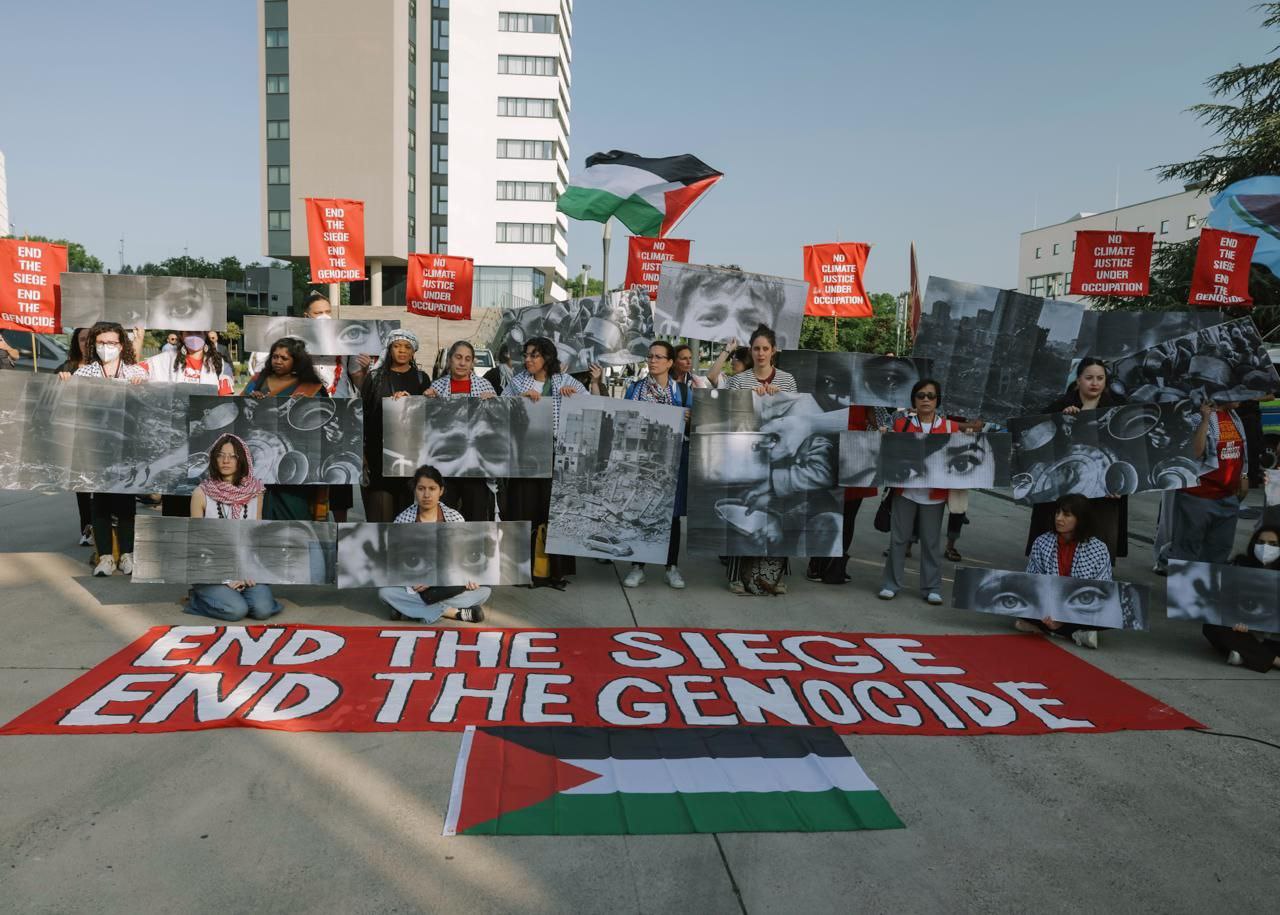
DCJ joins social justice movements around the world standing in solidarity with the peoples currently resisting the imperial attacks by the nexus of the U.S.-Israel and its allies across the world, especially Palestine, Iran, Lebanon, Yemen, Haití, Cuba, Venezuela, Nigeria, Sudan and the Democratic Republic of Congo, among others. We stand in solidarity with peoples across the world who have been on the receiving end of imperial wars, invasions, attacks to their sovereignty and their right to self-determination. We condemn the subjection of civilians to warfare for territory, natural resources, or religious conflict anywhere and everywhere. We stand in strong opposition to the perpetuation of human and environmental suffering across the world. We commit to a solidarity not based in words but in actions. There cannot be emancipation and liberation with ongoing imperial and colonial capitalism, which must be our first priority to dismantle.
This context matters because climate negotiations are not politically neutral spaces. They are shaped by the same global inequalities that produced the crisis. The countries and corporations most responsible for climate breakdown continue to hold disproportionate power over the terms of climate action, while the peoples and communities most affected continue to fight for their rights and justice. Every major issue on the agenda for SB64, from climate finance, adaptation, loss and damage to just transition, fossil fuel phase-out, mitigation and false solutions, reflects a broader struggle over rights, responsibility, redistribution and the future of multilateralism.
The ongoing genocide in Palestine, carried out by Israel with the military, political and economic backing of the United States and its allies, has laid bare the brutality and hypocrisy of the present international order. The destruction of Palestinian life, land, food systems, water infrastructure, energy systems, homes, hospitals, schools and places of worship is not only a humanitarian catastrophe. It is also a profound indictment of an international system that claims to uphold human rights, international law and multilateral cooperation while enabling impunity for occupation, apartheid and genocide. For climate justice movements, this moment demands political clarity: there can be no climate justice while genocide is normalised, while occupation is greenwashed, and while systems of militarism and fossil capitalism continue to destroy both peoples and ecosystems.
The relationship between militarism and climate breakdown is not incidental. Fossil fuels remain central to modern military power, geopolitical conflicts and domination, and global economic control. Military operations depend on oil, gas and petrochemical supply chains; fossil fuel revenues and infrastructure shape conflicts and geopolitical alliances; and the military-industrial complex absorbs vast public resources that could otherwise be directed towards climate finance, adaptation, public services and just transition. At the same time, war and occupation destroy the very systems that communities need to survive climate impacts: land, water, food, healthcare, housing, energy and social infrastructure.
This is why the climate crisis must be understood as part of a broader crisis of power imbalance. The same global system that drives emissions also drives war, displacement, debt, extraction and ecological destruction. It is a system that allows fossil fuel corporations to profit while communities lose homes and livelihoods; that allows governments to expand military budgets while claiming there is no money for climate finance; that allows financial institutions to enforce austerity while climate-vulnerable countries are forced to borrow to recover from disasters they did not cause.
The Global South continues to bear the brunt of this injustice. Countries and communities that contributed least to the climate crisis are facing the most severe impacts while being denied the resources necessary to respond. Many developing countries are trapped in cycles of debt servicing, austerity and extractive dependency that restrict their ability to invest in adaptation, public services, food sovereignty, energy transformation and resilient development. International financial institutions, unequal trade rules, intellectual property barriers and investor protections continue to constrain the policy space required for a just transition. In this context, calls for ambition that do not address finance, debt, technology and historical responsibility will become new forms of burden-shifting.
COP30 in Belém created important openings, but it did not resolve these contradictions. The establishment of the Just Transition Mechanism represented a significant victory for developing countries, workers, Indigenous Peoples, feminist movements, youth, frontline communities and climate justice organisations. It reflected years of organising to ensure that transition is not reduced to market-led technological substitution but understood as a question of justice, rights, livelihoods and systems transformation. The roadmap process on transitioning away from fossil fuels also opened a political space to confront the root cause of the climate crisis. Progress on adaptation and related implementation processes created additional possibilities for advancing rights-based and people-centred climate action.
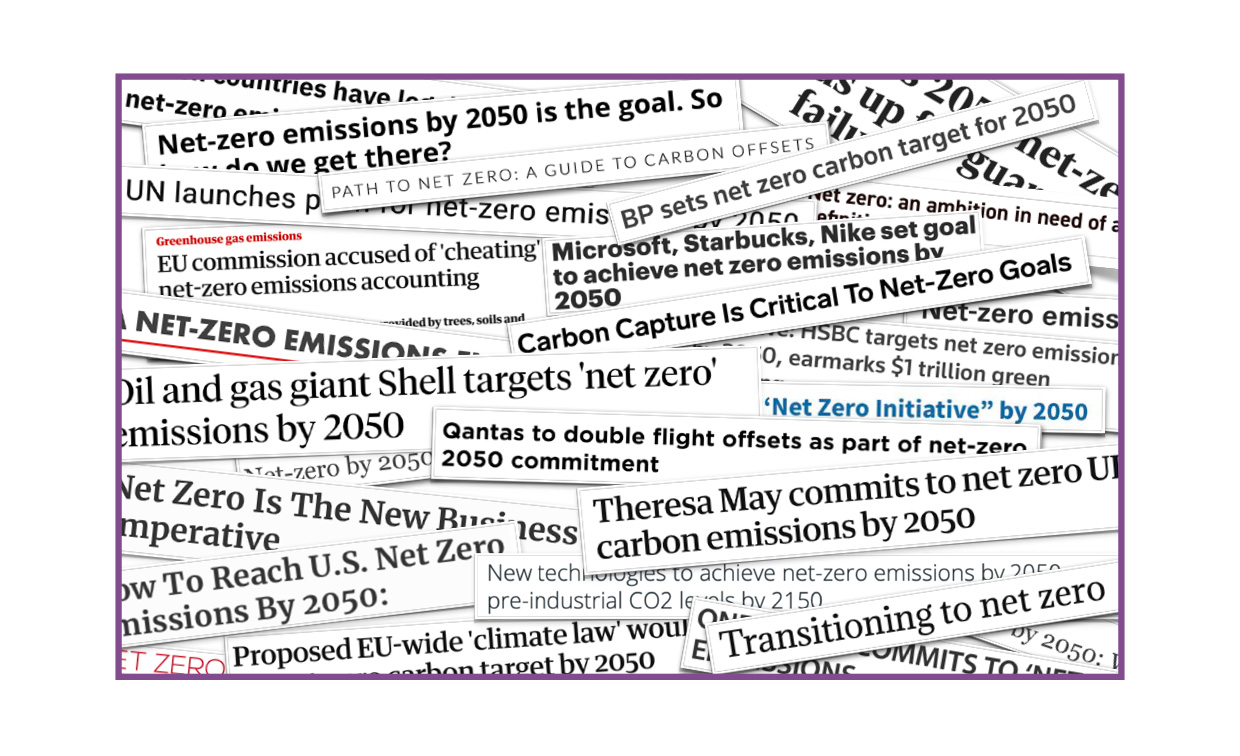
Yet COP30 also demonstrated the continued resistance of developed countries to fulfilling their obligations. Finance remained inadequate. Article 9.1 continued to be contested and diluted. Adaptation and loss and damage remained underfunded. Fossil fuel interests and false solutions continued to shape climate action. Carbon markets, offsets, carbon capture, financialised nature schemes and other mechanisms continued to be promoted as substitutes for real emissions reductions, public finance and system change. The outcomes of Belém therefore created both opportunities and risks. SB64 is where many of these political battles now move from recognition to operationalisation.
This distinction is critical. The fight after Belém is no longer only about whether Parties acknowledge the need for climate finance, just transition, adaptation, loss and damage or fossil fuel phase-out. It is about how those commitments are interpreted, governed, financed and implemented. History shows that implementation is often where justice is diluted. Commitments secured through struggle can be narrowed through technical processes, weakened through procedural delays, captured by corporate interests or redirected towards market mechanisms. SB64 must therefore be approached as a political battleground over the future direction of climate action.
For DCJ, the demands ahead of SB64 are rooted in a clear understanding of climate justice. Developed countries must fulfil their obligations under Article 9.1 and provide public, grant-based, predictable and adequate finance to developing countries. Adaptation and loss and damage must be financed as matters of rights and reparative justice. The Just Transition Mechanism must be operationalised in ways that support systemic transformation across energy, food, care, labour, public services, critical minerals and development pathways. The transition away from fossil fuels must be rapid, equitable, anti-extractivist and grounded in the political vision emerging from Santa Marta. Article 6 and other false solutions must not be allowed to delay real action or create new markets for pollution and dispossession. Mitigation must remain anchored in equity, CBDR-RC and means of implementation rather than becoming another tool for shifting burdens onto developing countries.
SB64 must also defend the integrity of climate multilateralism itself. This means protecting civic space, ensuring meaningful participation of rights-holders and movements, and confronting corporate capture within the UNFCCC. It means recognising that fossil fuel corporations, big polluters and actors complicit in militarism, occupation and ecological destruction cannot be allowed to define climate solutions or climate action. It means understanding that climate governance will lose legitimacy if it continues to treat the demands of the most affected as negotiable while protecting the interests of those most responsible.
The climate crisis is often described as a crisis of emissions. It is that, but it is also far more. It is a crisis of colonial history, economic organisation, political power and moral accountability. Addressing it requires more than technical implementation. It requires reparations, redistribution, democratic participation, public finance, energy sovereignty, food sovereignty, gender justice, Indigenous sovereignty and the dismantling of the systems that have made both people and planet expendable.
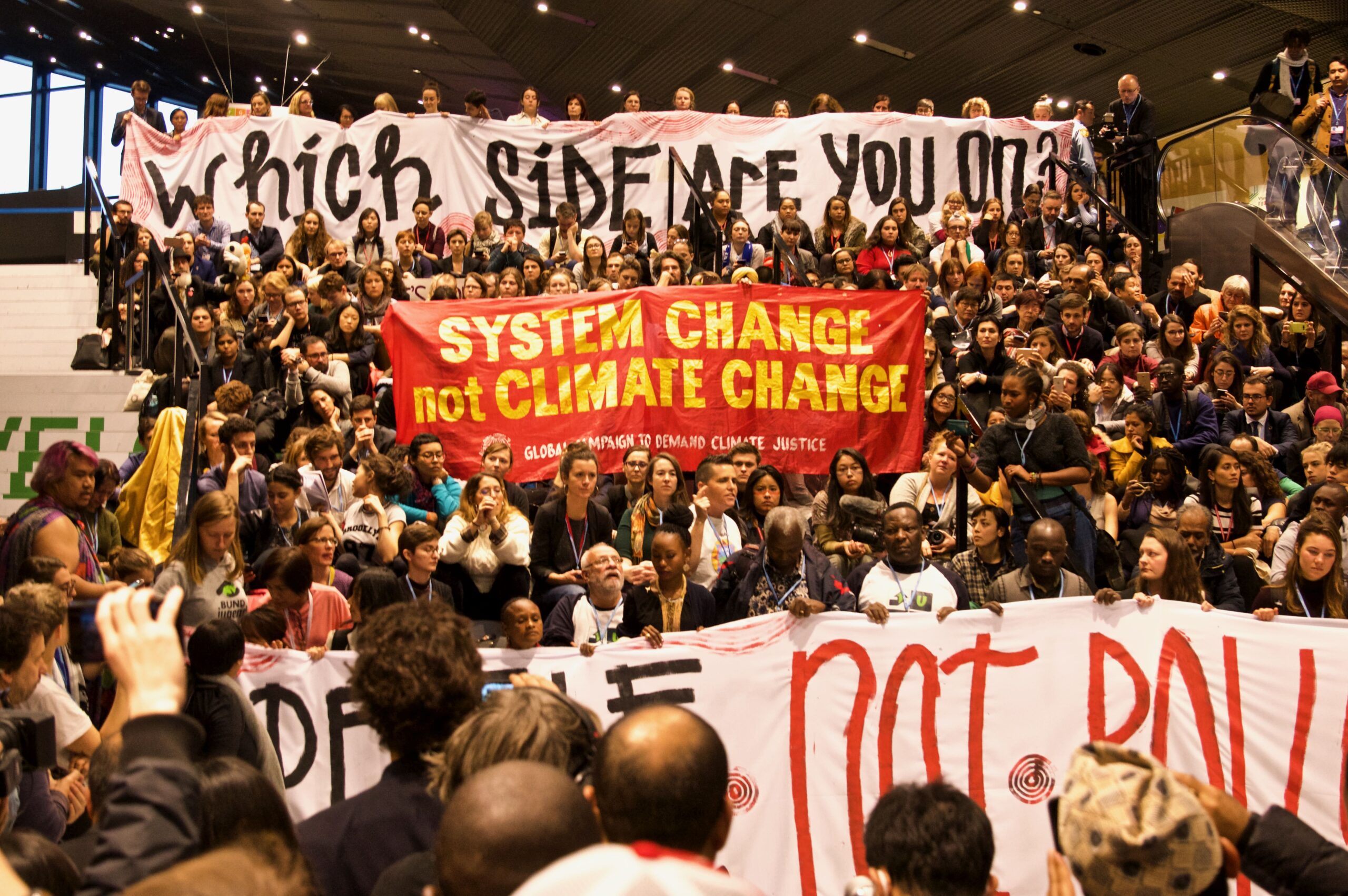
This position paper sets out DCJ’s priorities for SB64 from that perspective. It is written in the understanding that climate justice will not be delivered through incremental adjustments to an unjust system. It will require confronting the structures that created the crisis and building pathways rooted in collective survival, dignity and liberation. Systems change, not climate change.
Climate Finance Work Programme and Article 9.1
Climate finance remains the defining test of whether the climate regime is prepared to uphold the principles of equity and historical responsibility agreed at Rio in the 1992 UNFCCC. Developed countries continue to fall far short of their obligations despite overwhelming evidence that sufficient resources exist to finance transformative climate action. The struggle over Article 9.1 is not merely a debate about financial flows. It is a struggle over responsibility itself.
As articulated in its official submission, DCJ rejects attempts to frame climate finance as aid, philanthropy or voluntary support. Climate finance is an obligation rooted in historical responsibility and climate debt. Developed countries must provide public, grant-based, predictable and adequate finance consistent with their commitments under the UNFCCC and Paris Agreement. Climate finance must also be understood within a broader framework of reparative justice that includes debt cancellation, reform of the international financial architecture and mechanisms to ensure that those who have profited most from climate destruction contribute proportionately to addressing its consequences.
Adaptation Finance and the Global Goal on Adaptation
Adaptation is a matter of survival for billions of people across the Global South. Yet adaptation finance remains dramatically inadequate despite rapidly growing needs. Communities are already confronting severe climate impacts while lacking access to the resources necessary to strengthen resilience and protect livelihoods.
DCJ calls for a substantial increase in public, grant-based adaptation finance and rejects efforts to rely on private finance and market mechanisms. Adaptation must be grounded in rights, participation, Indigenous knowledge, food sovereignty and community leadership. The continued development of the Global Goal on Adaptation must support implementation rather than becoming an exercise in technocratic measurement detached from lived realities.
Loss and Damage
The climate crisis is already causing irreversible harms that cannot be prevented through mitigation or adaptation alone. Communities are losing homes, livelihoods, ecosystems, cultures and territories as climate impacts intensify. COP27’s establishment of the Fund for Responding to Loss and Damage (FRLD) represented an important political victory, but current levels of finance remain wholly inadequate compared to actual needs.
DCJ reiterates that loss and damage finance must be understood as reparative finance. It must be new, additional, grant-based and distinct from adaptation and mitigation finance. Polluter-pays mechanisms, including taxes on fossil fuel extraction, extreme wealth and corporate windfall profits, should be advanced as important sources of finance.
Operationalising the Just Transition Mechanism
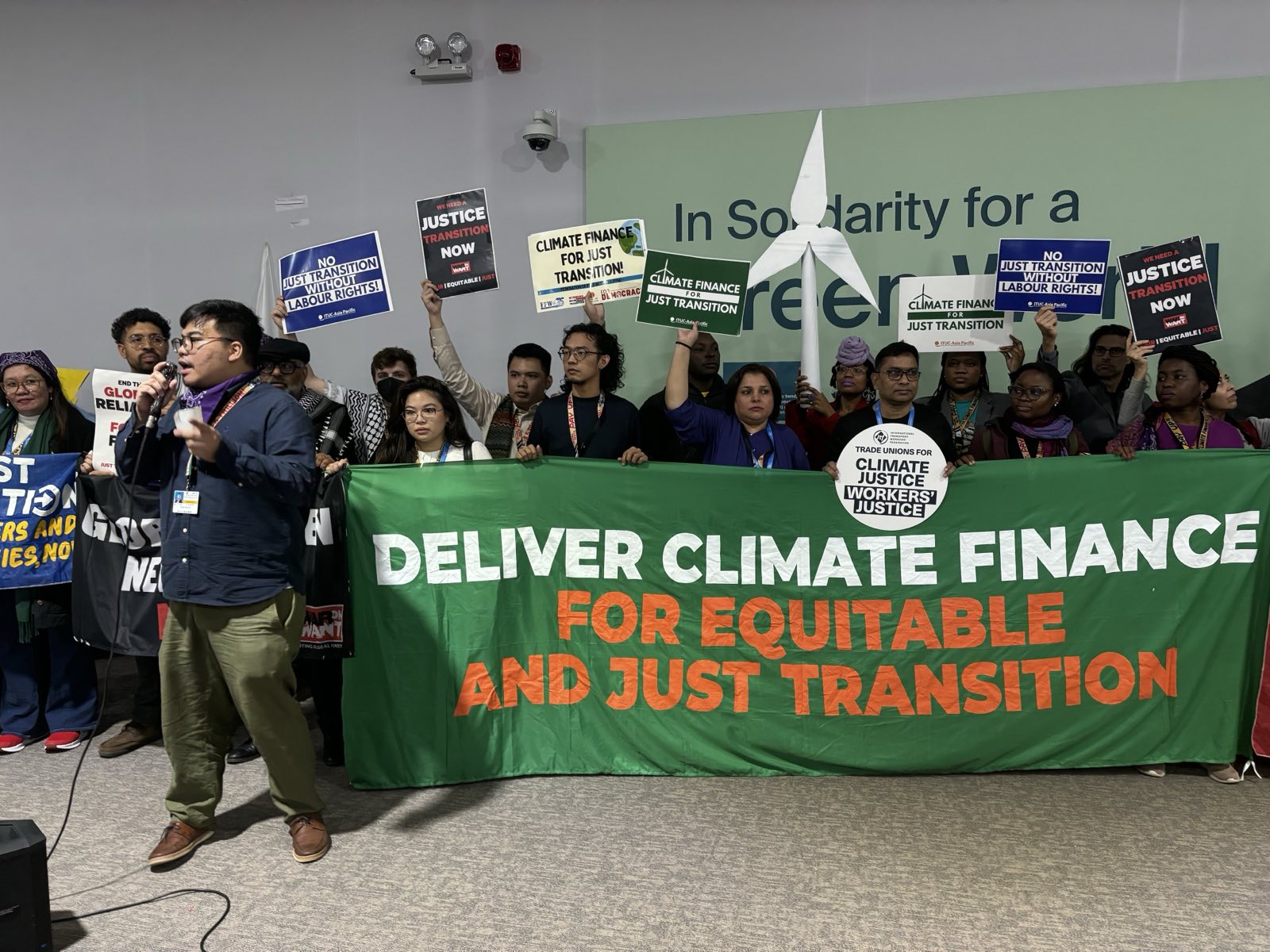
The establishment of the Just Transition Mechanism at COP30 represented a significant achievement. However, the creation of a mechanism alone does not guarantee justice. A central question in Bonn is whether the way SB64 defines and designs the Mechanism will support transformative change or merely manage the social consequences of existing economic models.
DCJ rejects narrow approaches that reduce just transition to energy sector restructuring or workforce adjustment. Just transition must encompass food systems, care economies, public services, critical minerals, workers’ rights, Indigenous sovereignty and democratic control over resources. The Mechanism must be supported by adequate finance and meaningful participation by workers, Indigenous Peoples, peasants, fisherfolk, women, youth and frontline communities.
Transitioning Away from Fossil Fuels
COP28’s commitment in Dubai to transition away from fossil fuels marked an important breakthrough, but implementation remains contested. The “roadmap” process initiated under the Brazilian COP30 Presidency (as opposed to any agreed mandate by all countries) must not become a vehicle for delaying action or reproducing extractivist development models under new forms.
Drawing on the political vision emerging from Santa Marta, DCJ calls for a transition rooted in justice, sovereignty, care and democratic control. The transition away from fossil fuels must not be used to justify new forms of extraction, including the expansion of critical mineral supply chains that sacrifice communities and ecosystems in the Global South. Climate justice requires confronting both fossil fuels and the systems of power that sustain them.
Article 6 and False Solutions
Climate justice movements continue to confront the expansion of false solutions that allow polluters to delay structural transformation while claiming climate leadership. Carbon markets, offsets, carbon capture technologies, geoengineering and the financialisation of nature all risk entrenching existing power structures while failing to address the root causes of climate breakdown.
The continued promotion of false solutions reflects the influence of fossil fuel interests and corporate actors within climate governance. SB64 must resist efforts to expand reliance in Nationally Determined Contributions (NDCs) on market-based approaches and instead prioritise real solutions rooted in public accountability, food sovereignty, Indigenous stewardship, community-controlled renewable energy and systemic transformation.
Mitigation Work Programme
The Mitigation Work Programme must remain firmly grounded in equity and CBDR-RC. Developing countries have repeatedly raised concerns regarding attempts to use the MWP as a vehicle for shifting mitigation burdens onto countries least responsible for the climate crisis while developed countries continue to evade obligations on finance and support.
Mitigation ambition cannot be separated from means of implementation. Climate finance, technology transfer, debt justice and policy space remain essential prerequisites for equitable climate action.
Cross-Cutting Priorities
Across all negotiating tracks, DCJ calls for climate action grounded in equity, historical responsibility, human rights, Indigenous sovereignty, feminist climate justice, democratic participation and protection from corporate capture. Climate governance must strengthen civic space, ensure meaningful participation by rights-holders and adopt robust conflict-of-interest policies that prevent fossil fuel interests and big polluters from shaping climate action.
The Challenge Before SB64
A central challenge facing SB64 is not the absence of solutions. Communities, movements and frontline peoples have long advanced pathways capable of addressing both climate breakdown and social injustice. The challenge is whether governments are prepared to confront the structures of power and privilege that continue to benefit from the crisis.
For DCJ, climate action must be rooted in reparative justice, international solidarity and systemic transformation. Anything less will preserve the unequal and unjust systems that created the climate crisis while leaving its underlying causes intact. SB64 must therefore advance implementation in ways that strengthen accountability, uphold historical responsibility and support the system change grounded in the peoples led solutions necessary to secure a just, equitable, healthy life and planet for all.
*Read the full position paper with detailed analysis and demands for all key negotiating topics here. You can also download it below*