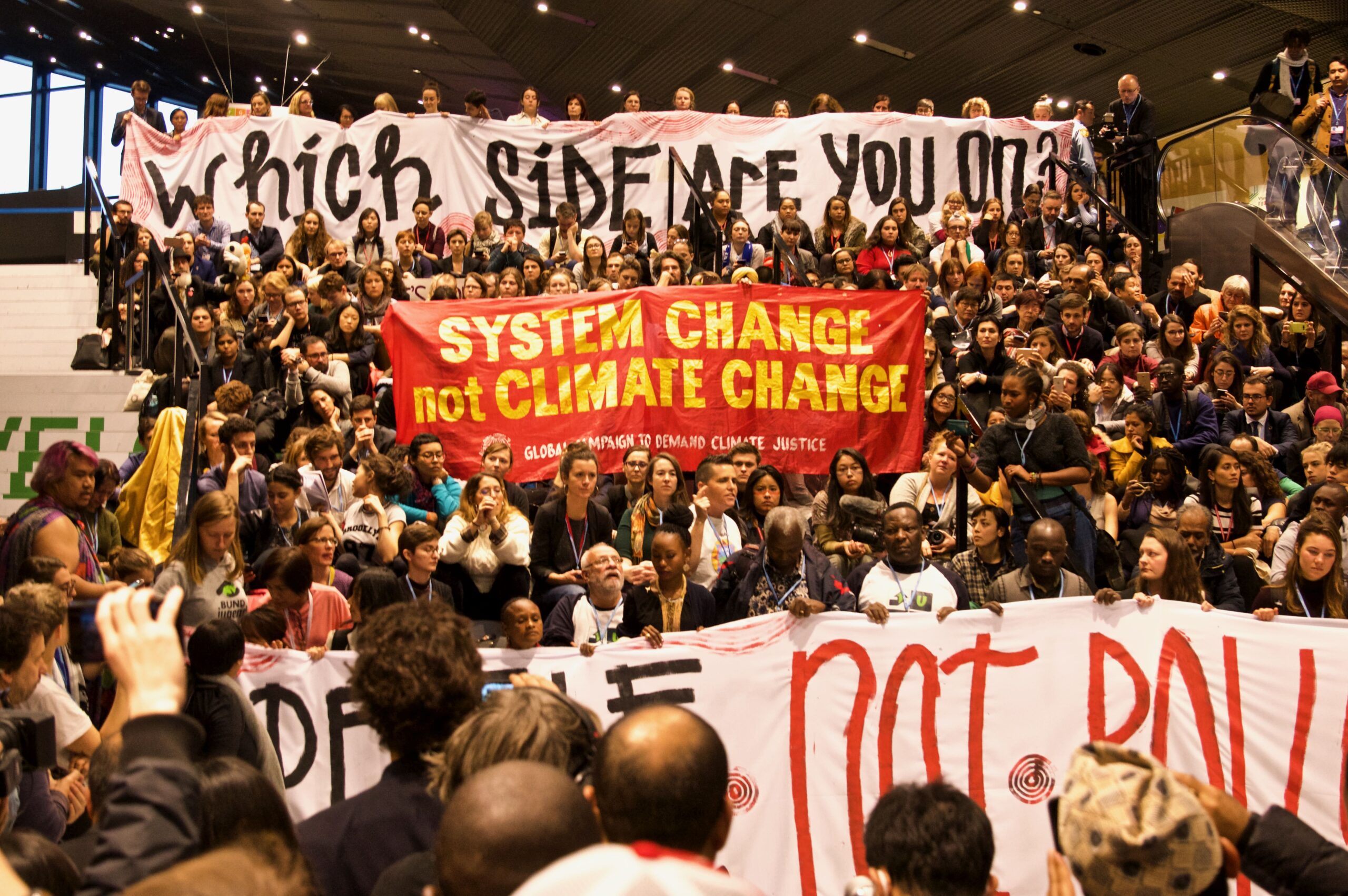
SB64 Intervention- June 13 intervention on the Just Transition Work Programme
The following statement was delivered during the Just Transition Work Programme negotiations on June 13 2026 on behalf of the ENGO-DCJ and ENGO-CAN during the 64th meeting of the Subsidiary Bodies (SB64) of the United Nations Framework Convention on Climate Change (UNFCCC):
Thank you Chair
I am Jesús Vázquez Negron from Puerto Rico and the international movement for food sovereignty: La Vía Campesina that represents 200 million members in more than 90 countries present in all continents across the world. I’m speaking today on behalf of ENGOs, Climate Action Network, and Demand Climate Justice (DCJ).
The Just Transition Mechanism should make food and agriculture a central element and ensure policy coherence amongst just transition pathways across sectors to avoid trade-offs
Key Messages should complement those agreed at COP30 – these are elements that are necessary to strengthen the governance of just transition on food and agriculture:
- Participation of workers, including workers in informal settings, Indigenous Peoples, African descendants, smallholders, landless people, pastoralists, fishers, women, youth and other vulnerable groups and communities who may be impacted by transitions in planning and roll-out, should be meaningful, go beyond consultation, be institutionalized and funded.
- Just Transitions must promote food sovereignty (as defined by UNDROP) and protect the Right to Food alongside food security. Food sovereignty means that food and agriculture need to be in the hands of the people and not in the hands of a few transnational corporations. Respect for Free, Prior, and Informed Consent of Indigenous Peoples and peasant farmers. Respect for the land and tenure rights of Indigenous Peoples, Afrodescendants, smallholder farmers, fishers, pastoralists, women, youth and other vulnerable groups.
- A just transition requires a fair and supported transition away from high-emission livestock and fossil-dependent systems, including for workers in the agribusiness and agrochemicals supply chain.
- Universal social protection guarantees for workers are essential for just transitions, especially social protection, decent incomes and working conditions, and should also cover workers in informal settings.
- The ethical use of Indigenous Peoples’ and traditional knowledge must inform just transition in the food and ag sectors.
- Finance for the Just Transition in Food and Ag should, as in other sectors, be public and grant-based.
- We also note that at the 5th Dialogue, agroecology and agroforestry were rightly and repeatedly celebrated as highly effective, holistic, and cost-effective approaches in National plans that can simultaneously advance climate mitigation, adaptation, biodiversity conservation, public health, animal welfare, food sovereignty, food security, and rural livelihoods. As the world faces spiralling hunger crises exacerbated by both climate change and rising fuel and fertiliser prices, Agroecology as a sustainable agrifood system rooted in ancestral and peoples knowledge must be recognised, promoted and practiced as a key opportunity to deliver Just Transitions in agriculture and food systems.
Long version sent to the Secretariat via email:
The Just Transition Mechanism should make food and ag a central element and ensure policy coherence amongst just transition pathways across sectors to avoid trade-offs
Key Messages should complement those agreed at COP30 – these are elements that are necessary to strengthen the governance of just transition on food and ag:
- Participation of workers, including workers in informal settings, Indigenous Peoples, African descendants, smallholders, fishers, women, and other vulnerable groups and communities who may be impacted by transitions in planning and roll-out, should be meaningful, go beyond consultation, institutionalized, and funded. (Para 23, 28, 38, 39, 41, 42, 44, 45, 46, 49, 54, 57, 58, 60, 71, 73, 108, 122).
- Promote food sovereignty (as defined by UNDROP) alongside food security, highlighting that food security extends beyond access to food to include the ability of people and communities to participate in decisions affecting food systems, natural resources, and food production, including through the protection of seed sovereignty and local food systems. (Para 48, 53)
- Respect for Free, Prior, and Informed Consent of Indigenous Peoples. Securing land and tenure rights of Indigenous Peoples, Afrodescendants, smallholders, fishers, women, and other vulnerable groups, as well as other rights, including the Right to Food, are prerequisite conditions to a just transition and food security and sovereignty. (Paras 41, 53, 59, 62, 84, 91, 97, 103, 112, 116).
- Smallholder farmers, fishers, and pastoralists should not bear the costs of transformation while large agribusinesses continue benefiting from public support. Workers in the agribusiness supply chain should also have access to support in order to transition to good jobs in sustainable sectors. (Paras 21, 22, 30, 32, 33).
- Guarantee universal social protection for workers, especially social protection, decent income, and working conditions, should also cover workers in informal settings, which represent a significant number of workers in the food and ag sector, and cover care work in food systems (Paras 21, 22, 28, 31, 32, 33, 36, 101, 112, 120, 129)
- Finance for the Just Transition in Food and Ag should, as in other sectors, be public and grant based, this is particularly relevant for this sector, as food should not be considered as a commodity and a tool of speculation, but as public goods (Para 67, 76).
- The ethical use of Indigenous Peoples and traditional knowledge must inform just transition in the food and ag sectors. Community-led innovation should be prioritized. Technology transfer should also be grounded in justice and equity while also excluding false solutions (Paras 41, 51, 52, 53, 55, 59, 60, 63, 86, 91, 116)
- Power imbalance and vested interests in food systems should be addressed to remove barriers to equal participation and the implementation of just transition principles (Paras 25, 49).
- We also note that at the 5th Dialogue, agroecology and agroforestry were rightly and repeatedly celebrated as highly effective, holistic, and cost-effective approaches in National plans that can simultaneously advance climate mitigation, adaptation, biodiversity conservation, public health, animal welfare, food security, and rural livelihoods. Agroecology is rooted in local ecological, social, and cultural contexts, enabling solutions that respond to regional and national circumstances while delivering multiple environmental and socio-economic benefits. As the world faces spiralling hunger crises exacerbated by both climate change and rising fuel and fertiliser prices, Agroecology must be recognised as a key opportunity to deliver Just Transitions in agriculture and food systems (Paras 61, 67, 82, 88, 107, 108, 111, 112).
- Plan a fair and supported transition away from high-emission livestock and fossil-dependent systems, including workers in the agribusiness and agrochemicals supply chain, through support for workers.
- Guarantee fundamental needs such as: land access, farm infrastructure, accompaniment, and protection of local seeds. (Para 53)